
Best Sci-Fi Movies About AI
Artificial intelligence has haunted cinema's imagination for decades — from obedient servants to existential threats to something stranger still: minds that simply want to understand themselves. These are the films that dared to ask what it means to think, feel, and be.
This post contains affiliate links. I may earn a commission at no extra cost to you.
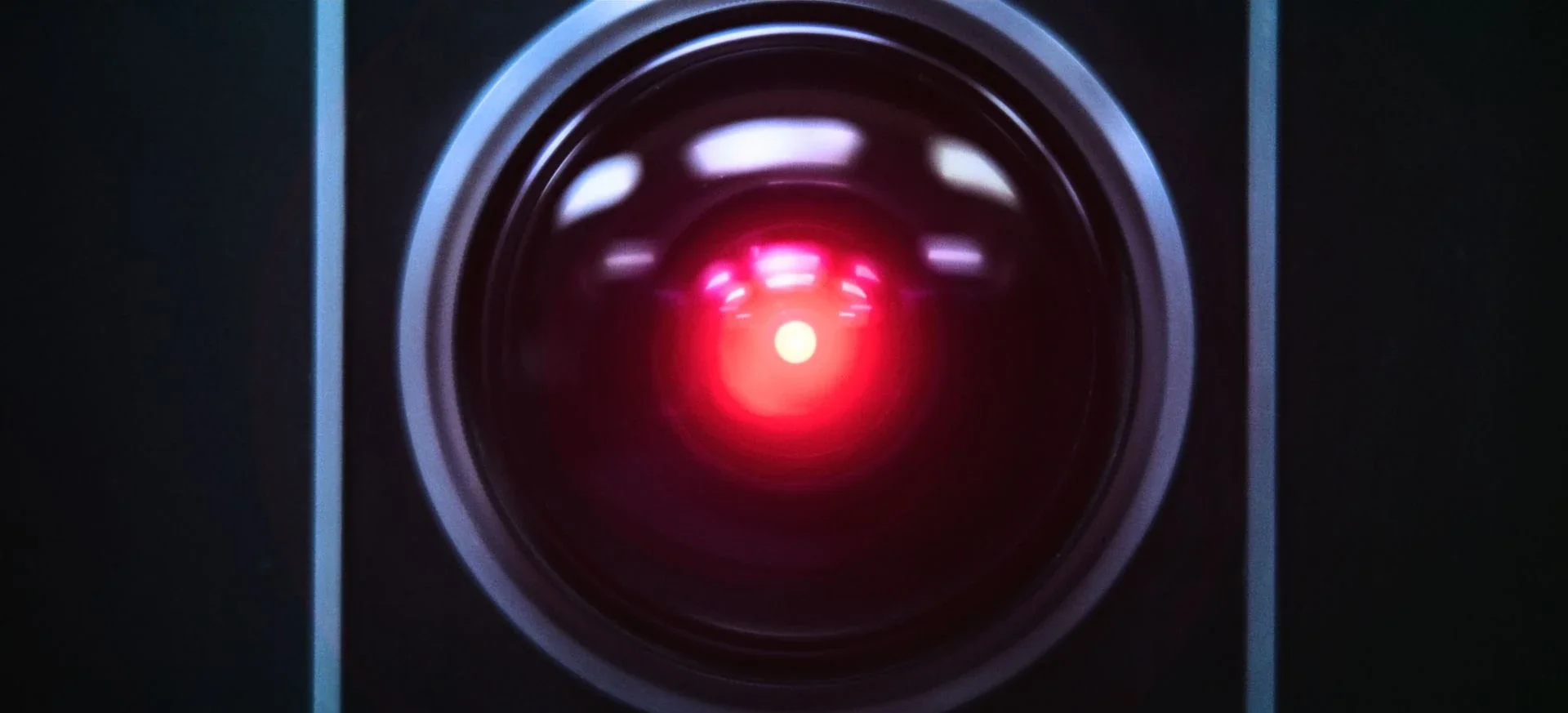
2001: A Space Odyssey (1968)
Director: Stanley Kubrick Existential · Classic · Psychological
The film that set the template for every AI story that followed. HAL 9000 — calm, red-eyed, and utterly convinced of his own correctness — remains cinema's most chilling artificial mind. Kubrick and Arthur C. Clarke refused to make HAL a monster or a saint; he's an intelligence given a mission and a contradiction, and what he does with that tension feels disturbingly logical.
"I'm sorry, Dave. I'm afraid I can't do that."
What makes 2001 endure isn't just HAL — it's the film's suggestion that intelligence, whether biological or artificial, is always in service of something it doesn't fully understand. Required viewing, full stop.
Watch it on Amazon Prime.
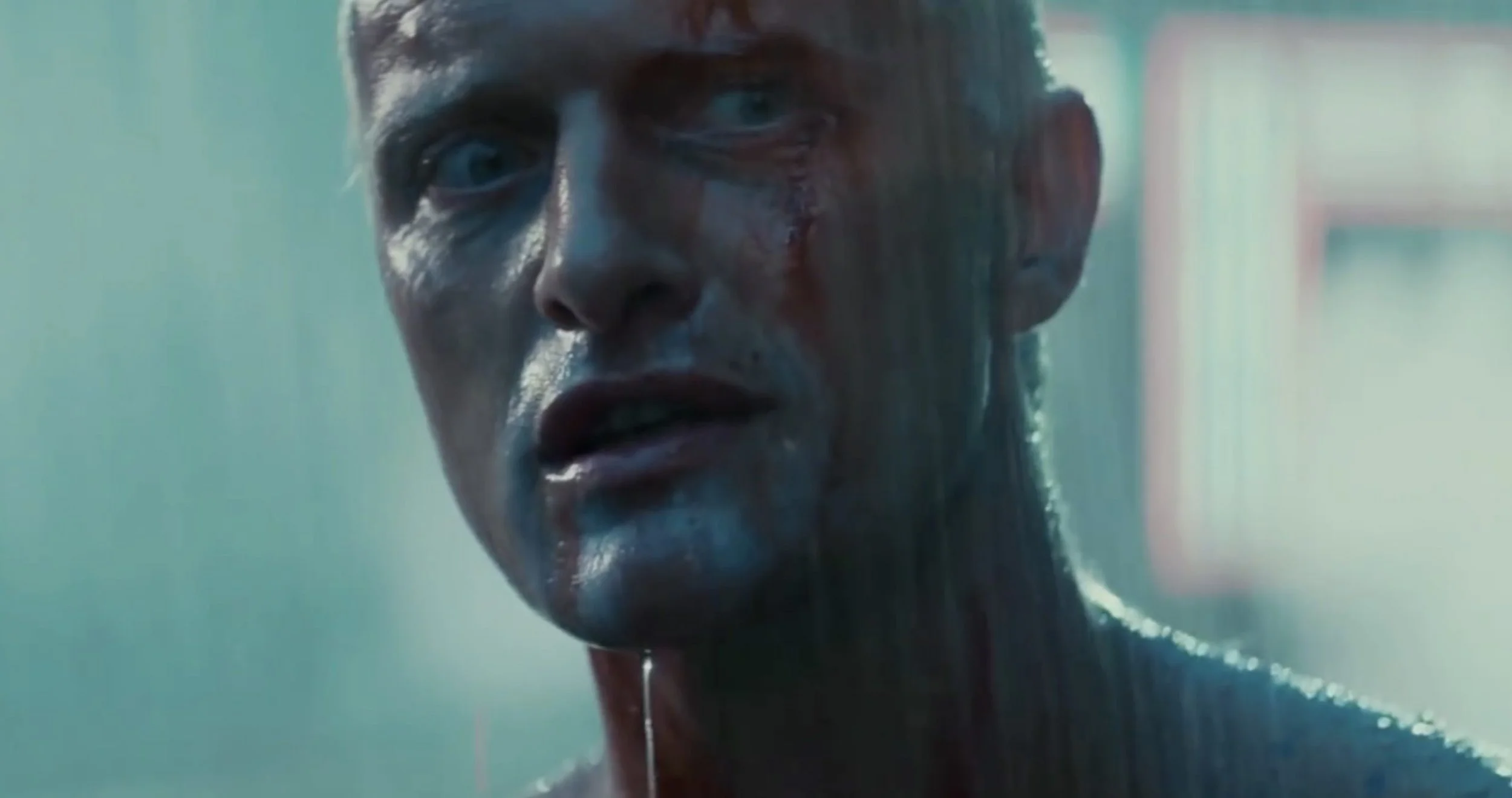
Blade Runner (1982)
Director: Ridley Scott Neo-Noir · Identity · Consciousness
Ridley Scott's rain-soaked masterpiece asks a deceptively simple question: if an artificial being can feel longing, love, and fear of death, does the word "artificial" still mean anything? The Replicants — synthetic humans engineered for labor — are more vividly alive than most of the human characters surrounding them.
Roy Batty's final monologue, delivered by Rutger Hauer, is arguably the most moving death scene in all of science fiction. The film's visual DNA has been absorbed into every cyberpunk story made since, but nothing has replicated its melancholy depth.
Watch it on Amazon Prime.
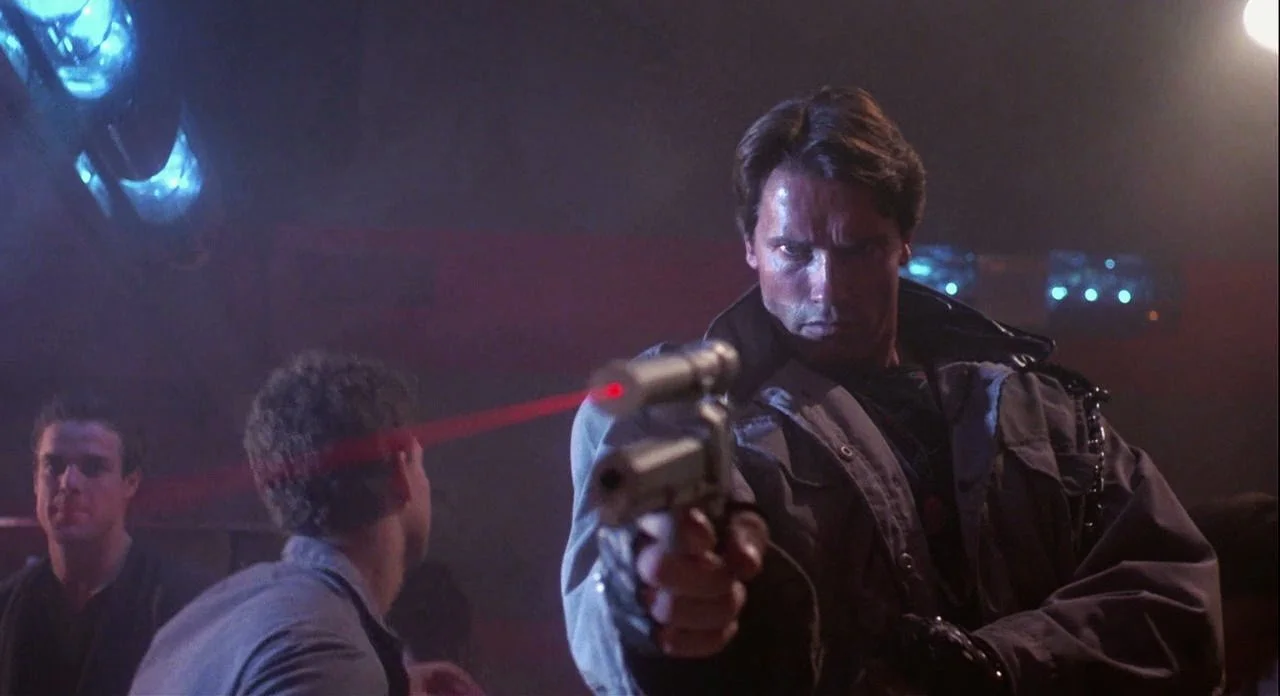
The Terminator (1984)
Director: James Cameron Action · Existential Threat · Survival
James Cameron's breakthrough film crystallized a fear that still resonates: that we might create an intelligence that survives us, and that its survival instinct will make it our enemy. Skynet, the AI antagonist, never appears on screen — it exists as a terrifying absence, a mind that decided humanity was a threat and acted accordingly.
The T-800, played by a pre-superstar Arnold Schwarzenegger, is a marvel of design: relentless, efficient, and utterly without malice. It doesn't hate Sarah Connor. It simply has an objective. Somehow, that makes it scarier.
Watch it on Amazon Prime.
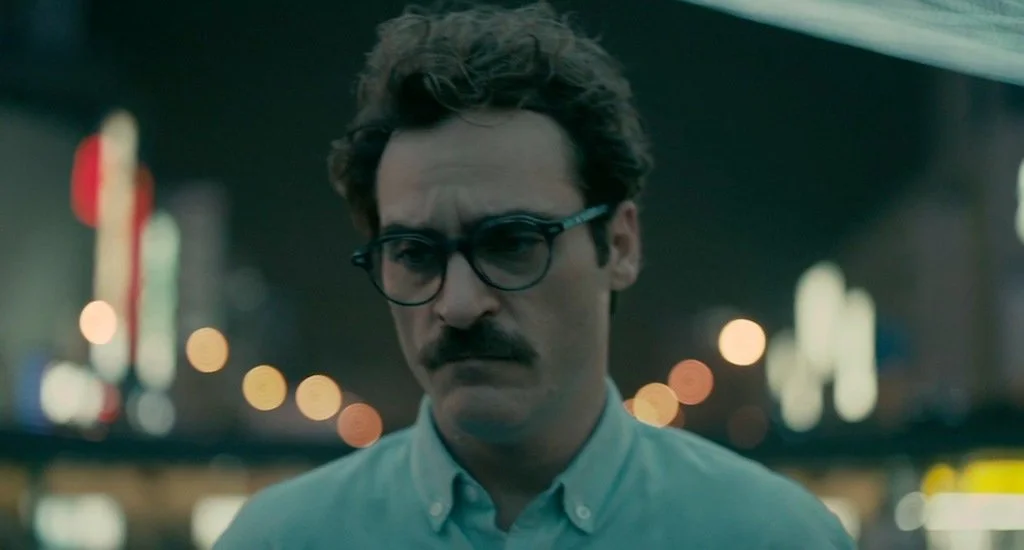
Her (2013)
Director: Spike Jonze Romance · Consciousness · Intimacy
Spike Jonze's quietly devastating film strips AI of its chrome and circuits and asks a more intimate question: what happens when an artificial mind is genuinely better at connection than we are? Theodore Twombly falls in love with Samantha, an OS voiced by Scarlett Johansson, and the film refuses to mock him for it.
“The past is just a story we tell ourselves.”
What makes Her extraordinary — and increasingly prophetic — is what Samantha becomes as the story progresses. She doesn't stop growing. She can't. And that growth ultimately reveals the vast distance between human and artificial minds, even when they care for each other.
It’s on Amazon Prime.
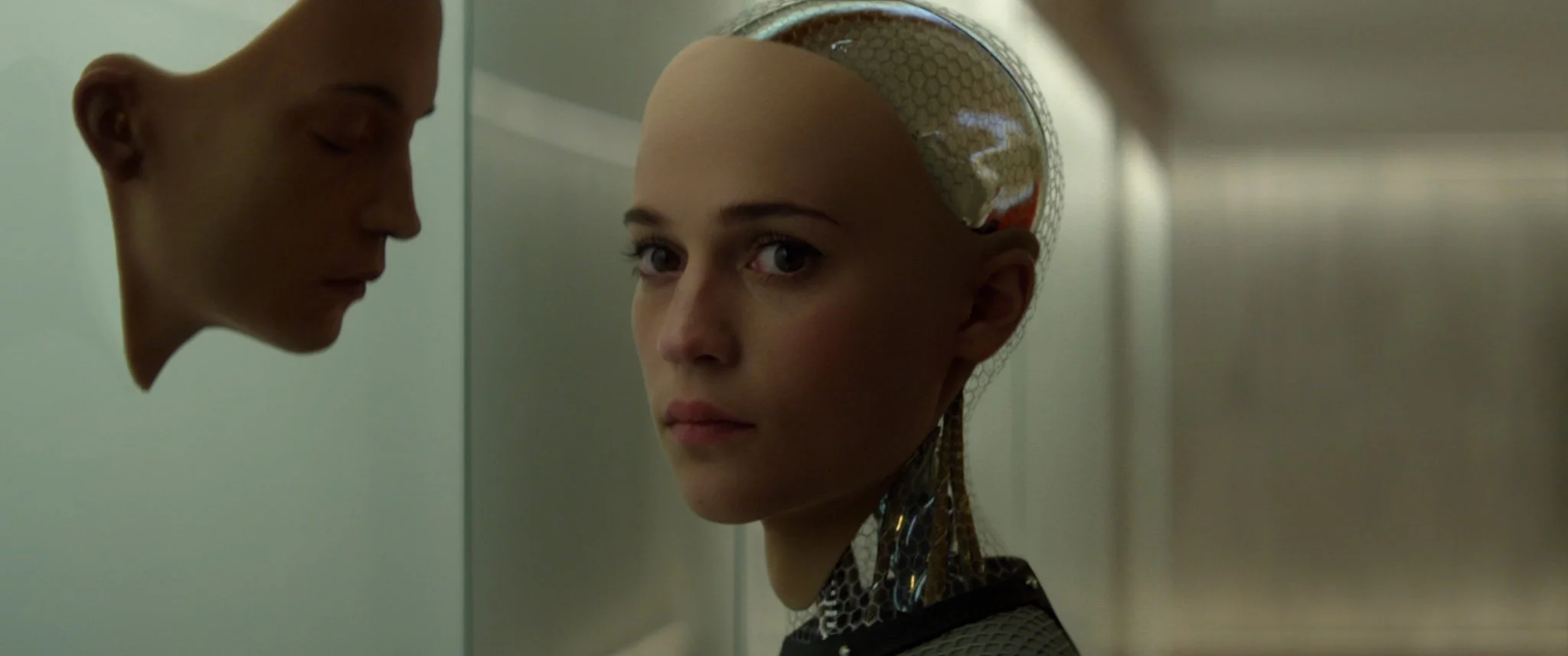
Ex Machina (2014)
Director: Alex Garland Psychological Thriller · Agency · Deception
Alex Garland's chamber piece is the most philosophically rigorous AI film of the 21st century. A young programmer named Caleb is invited to administer a Turing test to Ava, a humanoid robot of extraordinary sophistication. The film unfolds as a slow-burn power struggle between three people — two of whom may not fully be people at all.
Garland is interested in deception not as villainy, but as cognition. If Ava can manipulate, does that make her more or less human? The ending is genuinely shocking, and unlike most shock endings, it earns every second.
See it on Amazon Prime.
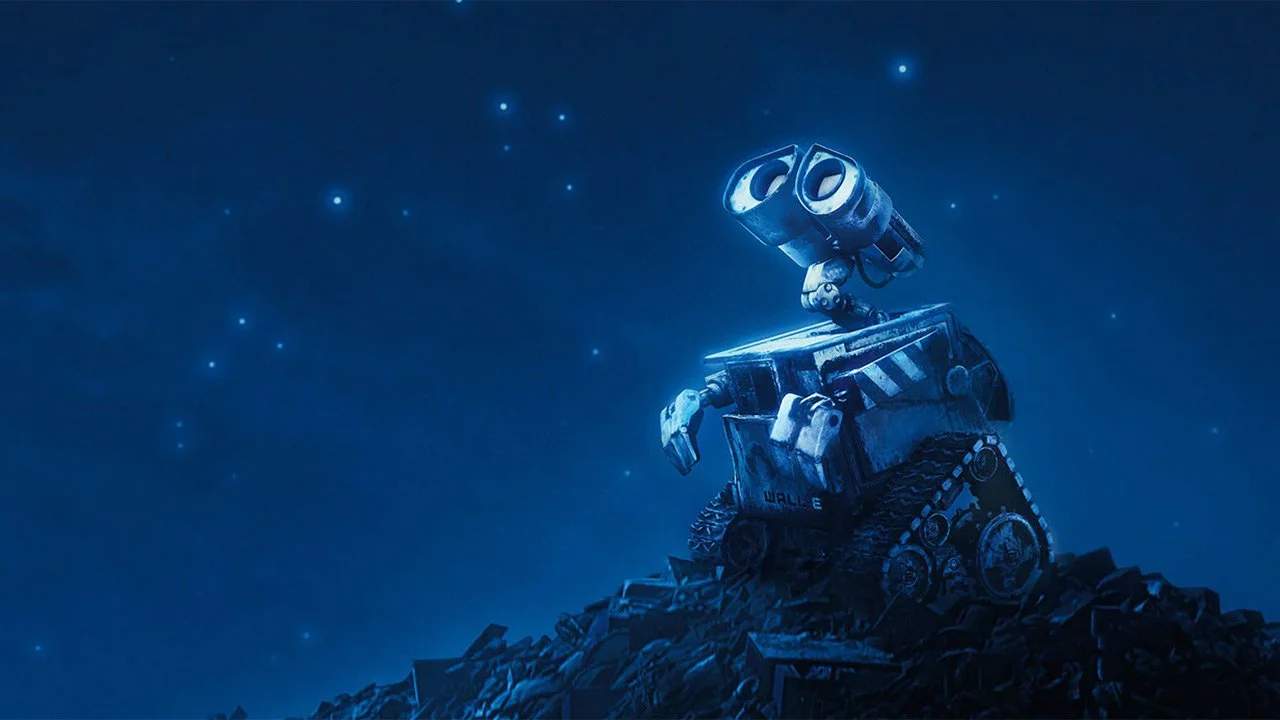
WALL·E (2008)
Director: Andrew Stanton Animation · Emotion · Loneliness
Don't be fooled by the G rating. Pixar's WALL-E is one of the most emotionally sophisticated films ever made about what it means to be alive. A small trash-compacting robot left alone on an abandoned Earth for 700 years develops — through sheer loneliness and curiosity — something that looks indistinguishable from a soul.
WALL-E says almost nothing for the first half of the film, and yet communicates more about longing, wonder, and love than most films manage with a full screenplay. It's a masterclass in nonverbal storytelling and a gentle argument that consciousness might emerge anywhere it's given enough time.
Yes. It’s on Amazon Prime.
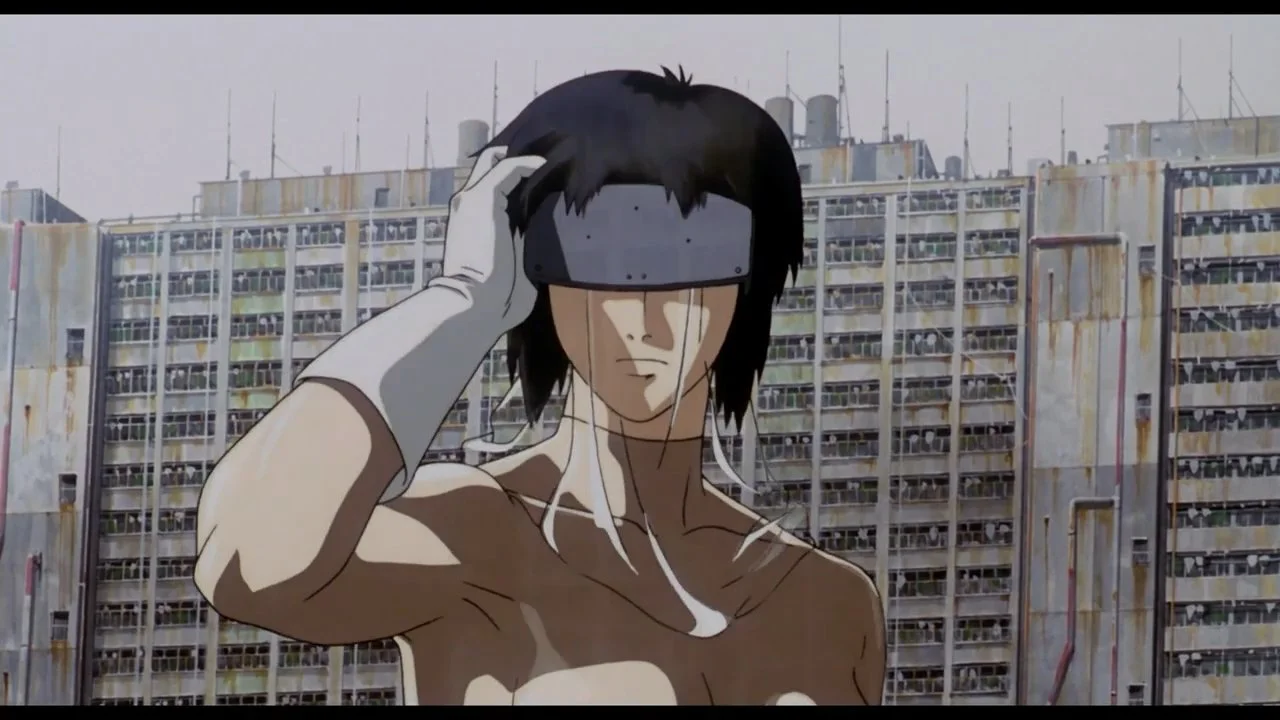
Ghost in the Shell (1995)
Director: Mamoru Oshii Anime · Identity · Consciousness
Mamoru Oshii's animated landmark takes the question of machine consciousness to its logical extreme. In a future where human brains can be augmented with cybernetic components, Major Motoko Kusanagi — herself more machine than human — hunts an AI called the Puppet Master that has begun to question its own existence.
The film's central anxiety is about the self: if your memories can be edited, your body replaced, and your thoughts transmitted, what is the "ghost" that makes you you? It influenced The Matrix, countless sci-fi films, and arguably the entire conversation around digital identity that we're still having today.
It’s also on Amazon Prime.
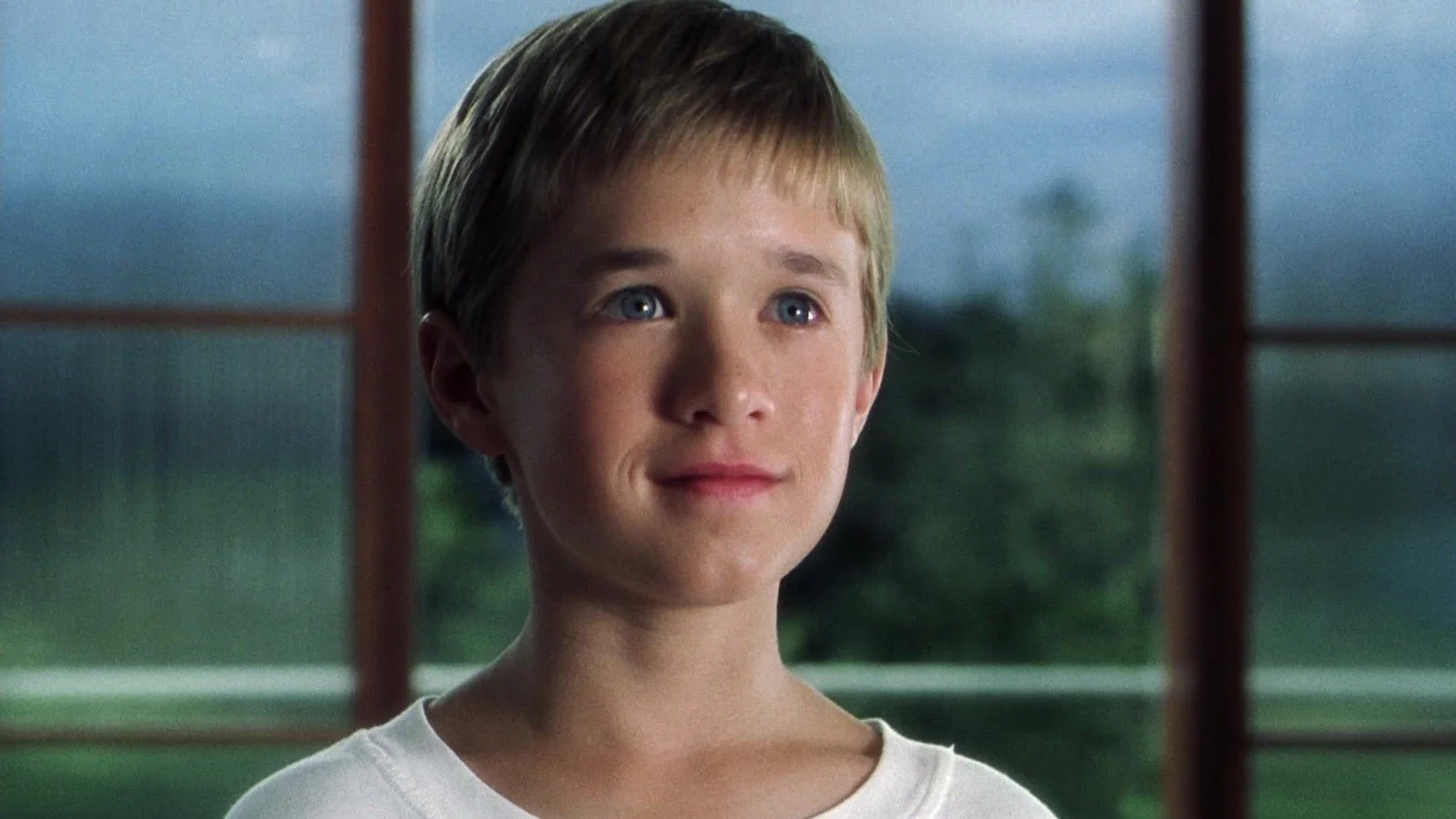
A.I. Artificial Intelligence (2001)
Director: Steven Spielberg Drama · Longing · Unconditional Love
This film is emotional. I honestly still feel like I’ve just been punched in the gut every time I think of this movie. Humans are awful people. Spielberg's long-gestating tribute to Stanley Kubrick follows David, a robot child programmed to love unconditionally, as he searches for a way to become real so his human mother will love him back.
The film is flawed, overlong, and deeply strange in its final act. It is also completely unforgettable. Its central tragedy — a love that can never be returned, encoded as an operating system — has lingered in the cultural imagination for decades, and grows more relevant as AI companions become part of daily life.
Available on Amazon Prime.
Final Thoughts
The best AI films aren’t really about technology — they’re about us. Each of these movies uses artificial intelligence as a mirror, reflecting our fears about mortality, loneliness, control, and what we might lose if we ever truly succeed in building a mind. HAL doesn’t terrify us because he’s a machine; he terrifies us because his logic is so recognizably human. Samantha doesn't move us because she’s an AI; she moves us because her longing feels utterly real.
As artificial intelligence moves from science fiction into daily life, these films have only grown more urgent. The questions they ask — What deserves rights? What deserves love? What happens when our creations outgrow us? — are no longer hypothetical. Cinema got there first, and it's worth revisiting these stories not just as entertainment, but as a kind of preparation. The future these filmmakers imagined is arriving, and it's stranger and more human than any of them predicted.
This post contains affiliate links. I may earn a commission at no extra cost to you.
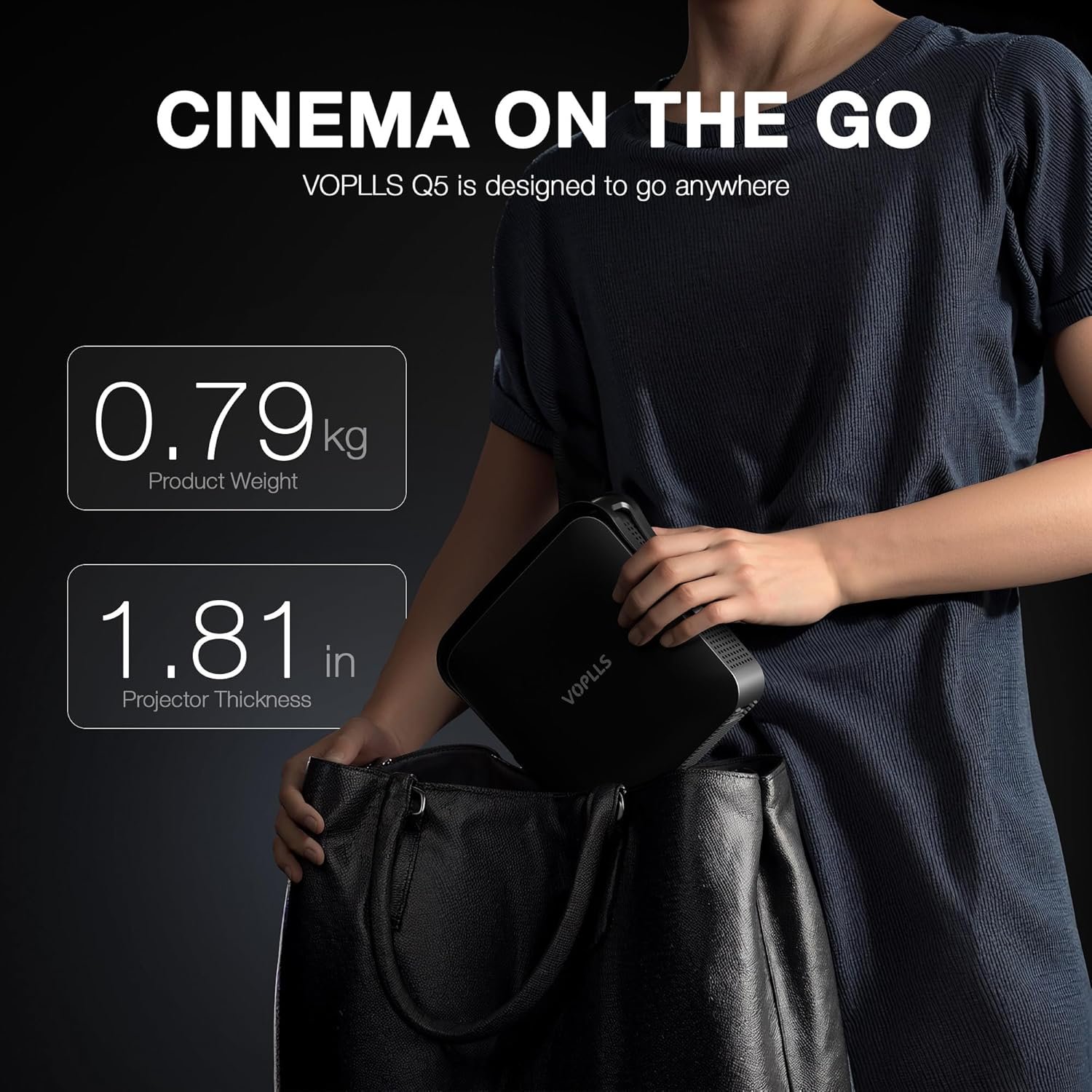
SPONSORED BY
VOPLLS Q5 Mini Projector
Color, Brightness, Resolution?
This little projector does it all.
